
Acupuncture for Anxiety Relief in Garden City NY

Updated: Oct 5
Quick answer: Acupuncture can be a calming, drug-free complement to anxiety care. Many patients use it to ease physical symptoms such as muscle tension, poor sleep and a constantly racing mind. It is not a replacement for therapy or medication from your doctor, and most people notice changes over a series of visits. At Big Apple Acupuncture in Garden City, Dr. Xiao Chen tailors each session to you. Call (516) 250-7051 or book online.
When your mind feels stuck in overdrive, anxiety rarely stays in your thoughts alone. It can show up as tight shoulders, shallow breathing, poor sleep, digestive upset, jaw tension, a racing heart, or that constant sense that your body never fully powers down. Most people considering acupuncture want a clear, grounded answer: can this actually help, and what does treatment look like in real life?
The short answer is that acupuncture may be a helpful option for anxiety support, especially when stress is affecting sleep, muscle tension, energy, and overall nervous system regulation. It is not a one-size-fits-all fix, and it works best when care is personalized. That matters, because two people can both say, "I feel anxious," while having very different patterns underneath.
How acupuncture supports anxiety relief
From a modern wellness perspective, acupuncture is often used to help regulate the body’s stress response. Many patients seek care when they feel wired, restless, tense, or emotionally drained. The goal is not to numb the body or force relaxation. The goal is to help the nervous system shift out of a constant stress pattern and return to a steadier baseline.
That shift can affect more than mood. When the body is under ongoing pressure, sleep quality often drops, digestion can become more reactive, headaches may increase, and muscle tension tends to build. Acupuncture is commonly used as part of a broader plan to support calmer sleep, easier breathing, reduced physical tension, and a greater sense of recovery after stress.
In traditional Chinese medicine, anxiety is not viewed as a single isolated issue. It may relate to patterns involving sleep disruption, internal heat, tension, fatigue, digestive imbalance, or an overburdened system that has lost its ability to recover smoothly. That framework allows treatment to be tailored rather than generic.
What to expect at an acupuncture visit for anxiety
If you are considering acupuncture for anxiety relief in Garden City NY, the first thing to know is that a good visit should feel thoughtful, not rushed. Treatment usually starts with a conversation about what anxiety feels like for you. Some patients describe chest tightness and panic-like symptoms. Others feel more irritable, overstimulated, exhausted, foggy, or emotionally on edge.
A practitioner may also ask about sleep, digestion, headaches, cycle of stress at work, energy dips, body tension, and how long symptoms have been building. This is important because anxiety support often overlaps with other concerns. Someone who wakes at 3 a.m. every night may need a different treatment approach than someone whose main issue is daytime tension and digestive discomfort.
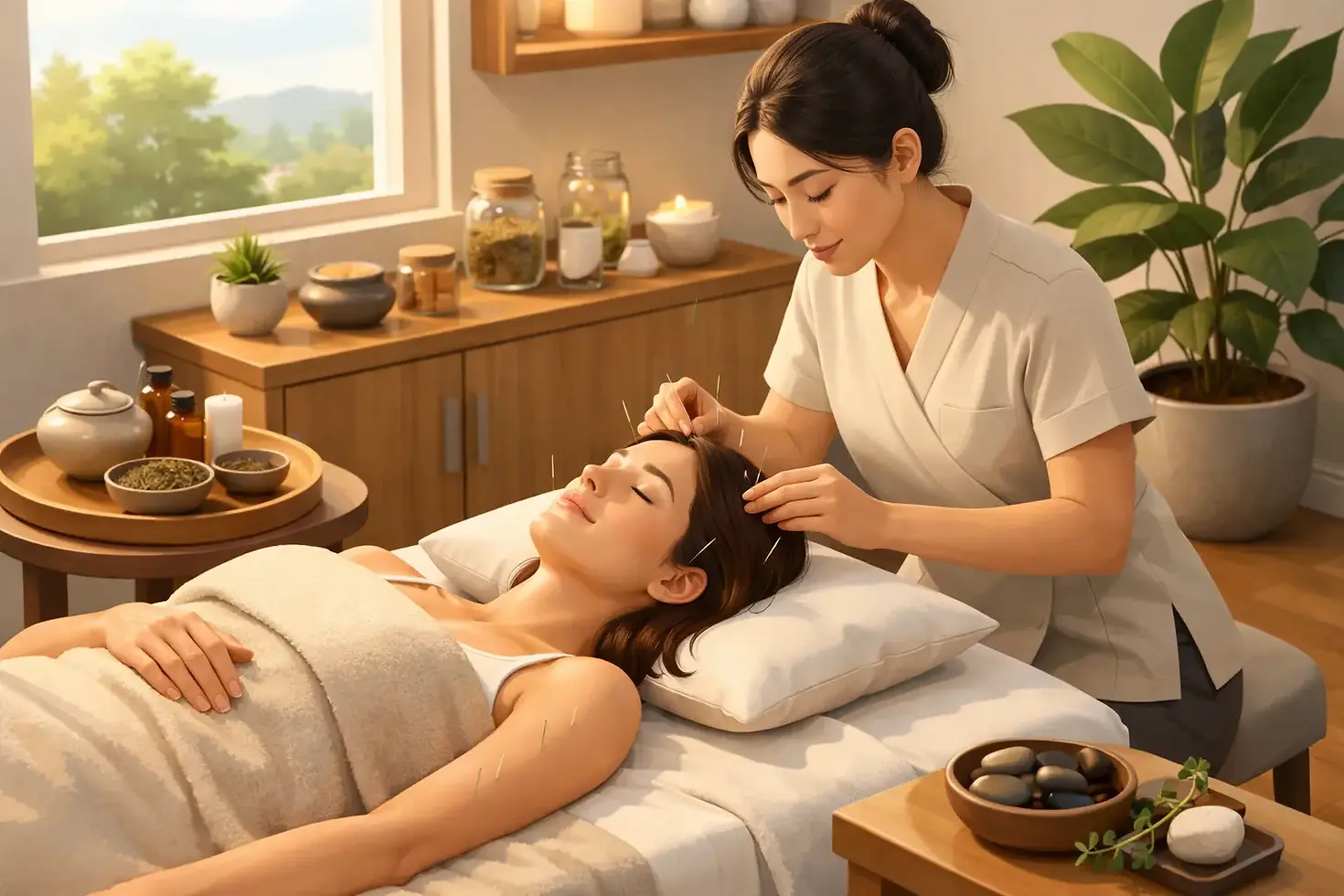
During the session, very fine needles are placed at selected points on the body based on your presentation. Many patients are surprised by how calm treatment feels. Sensations vary, but people often report heaviness, warmth, tingling, or a gradual softening of tension. Some feel deeply relaxed during the session. Others do not feel dramatically different right away but notice later that they slept better, reacted less strongly to stress, or felt physically looser.
Why personalized care matters for anxiety
Anxiety is often discussed as though it is one condition with one treatment path. In practice, that is rarely true. Stress can be acute or long-standing. It can be driven by work pressure, caregiving demands, poor sleep, burnout, chronic pain, or a period of prolonged overwhelm. The body patterns behind those experiences are not always the same.
That is why personalized care matters. A patient with anxiety and insomnia may need treatment centered on settling the mind and supporting deeper rest. A patient with anxiety and digestive discomfort may need a plan that also addresses bloating, appetite changes, or stress-related stomach tension. If headaches, neck stiffness, and jaw clenching are part of the picture, those need attention too.
At a clinic like Big Apple Acupuncture & Herbal Therapy, this kind of individualized approach fits the broader goal of long-term nervous system balance rather than short-term symptom chasing. That does not mean every treatment has to be long and complicated. It means the plan should reflect your actual pattern, your pace, and how your body responds over time.
When people notice results
This is one of the most common questions, and the honest answer is that it depends. Some patients feel calmer after the first session, especially if their body has been holding obvious tension and they respond quickly to treatment. Others notice change more gradually over several visits.
Anxiety that has been building for months or years often takes time to unwind. If poor sleep, digestive symptoms, headaches, or chronic tension are also involved, progress may happen in layers. Sleep may improve first. Then body tension may ease. Then emotional reactivity may feel more manageable. That kind of gradual change is common and often more sustainable than a brief dramatic shift.
Consistency matters. A treatment plan is usually more effective when visits are close enough together to help the body build momentum. Once symptoms improve, care may be spaced out based on your goals, stress level, and how stable you feel.
What acupuncture can and cannot do
Acupuncture can be a valuable part of anxiety support, but it helps to have realistic expectations. It may support relaxation, better sleep, reduced physical stress symptoms, and improved recovery after ongoing strain. It can also be useful for people who want a non-pharmaceutical or integrative option as part of their care.
At the same time, it is not a magic reset button. If your schedule is unsustainable, your sleep is regularly interrupted, or you are carrying constant physical and emotional overload, treatment works best when it is part of a broader plan. That may include better recovery habits, counseling support, movement, breathwork, medical evaluation when appropriate, or changes in how you manage stress day to day.
This is not a limitation of acupuncture so much as a reflection of how anxiety works. The nervous system responds to patterns. Treatment can support that system, but lasting change often comes from both clinical care and daily life adjustments.
Who may be a good fit for this approach
Adults dealing with stress-related symptoms often seek acupuncture when they want support that is personalized, calming, and focused on whole-body function. This includes professionals running on adrenaline, parents and caregivers who feel depleted, and people whose anxiety is showing up physically through tension, sleep disruption, headaches, or digestive discomfort.
It can also be a good fit for patients who do not want care that feels impersonal. The treatment setting matters. A calm, well-structured environment can be especially helpful for people whose systems are already overstimulated.
If you are not sure whether your symptoms fit, consider the broader picture. Anxiety support is often relevant when your body has trouble settling, your sleep feels light or broken, your muscles stay tense, and stress seems to spill into everything else.
A calm clinical setting makes a difference
For anxiety care, the environment is not a small detail. A rushed, noisy, overstimulating visit can work against the outcome you are seeking. Patients often do better when treatment takes place in a setting that feels professional, quiet, and grounded.
That is one reason modern holistic clinics are increasingly focused on patient experience as well as treatment technique. Clear communication, personalized planning, and a calm atmosphere can help patients feel safe enough to let their guard down. For many people with chronic stress, that alone is a meaningful part of the healing process.
In Garden City and across Nassau County, patients are often looking for care that feels both clinically credible and genuinely supportive. They want a practitioner-led experience, not generic wellness language. They want to know what the treatment is for, how it may help, and whether it makes sense for their symptoms.
Is herbal support ever part of the plan?
Sometimes, yes. In traditional Chinese medicine, herbal therapy may be used alongside acupuncture when it fits the patient’s presentation. This depends on the individual, their symptoms, and whether a combined approach is appropriate.
For some patients, acupuncture alone is the right starting point. For others, adding herbal support may help reinforce treatment goals related to stress patterns, sleep, or overall balance. As with acupuncture, the key is personalization rather than using the same solution for everyone.
If you are using insurance benefits, it can also be helpful to ask about documentation. Insurance-friendly receipts and HSA or FSA-friendly superbills may be available for eligible services, which can make ongoing care more practical.
Anxiety has a way of convincing people they should just push through it. But when stress keeps showing up in your sleep, digestion, tension, and energy, support is not a luxury. It is often the first step toward feeling like yourself again.
Frequently asked questions
How many acupuncture sessions does it take to help with anxiety?
Some people feel calmer after the first visit, but lasting change usually comes from a series of treatments, often weekly at first. Dr. Chen will suggest a plan based on your symptoms, sleep and stress load. See our first-visit guide for what to expect.
Can I keep taking my anxiety medication?
Yes. Acupuncture is used alongside, not instead of, medication or therapy. Do not stop or change any medication without talking to the clinician who prescribed it.
What if I need help right away?
If you are in crisis or having thoughts of harming yourself, call or text 988 to reach the Suicide & Crisis Lifeline, or go to the nearest emergency room.


Comments