
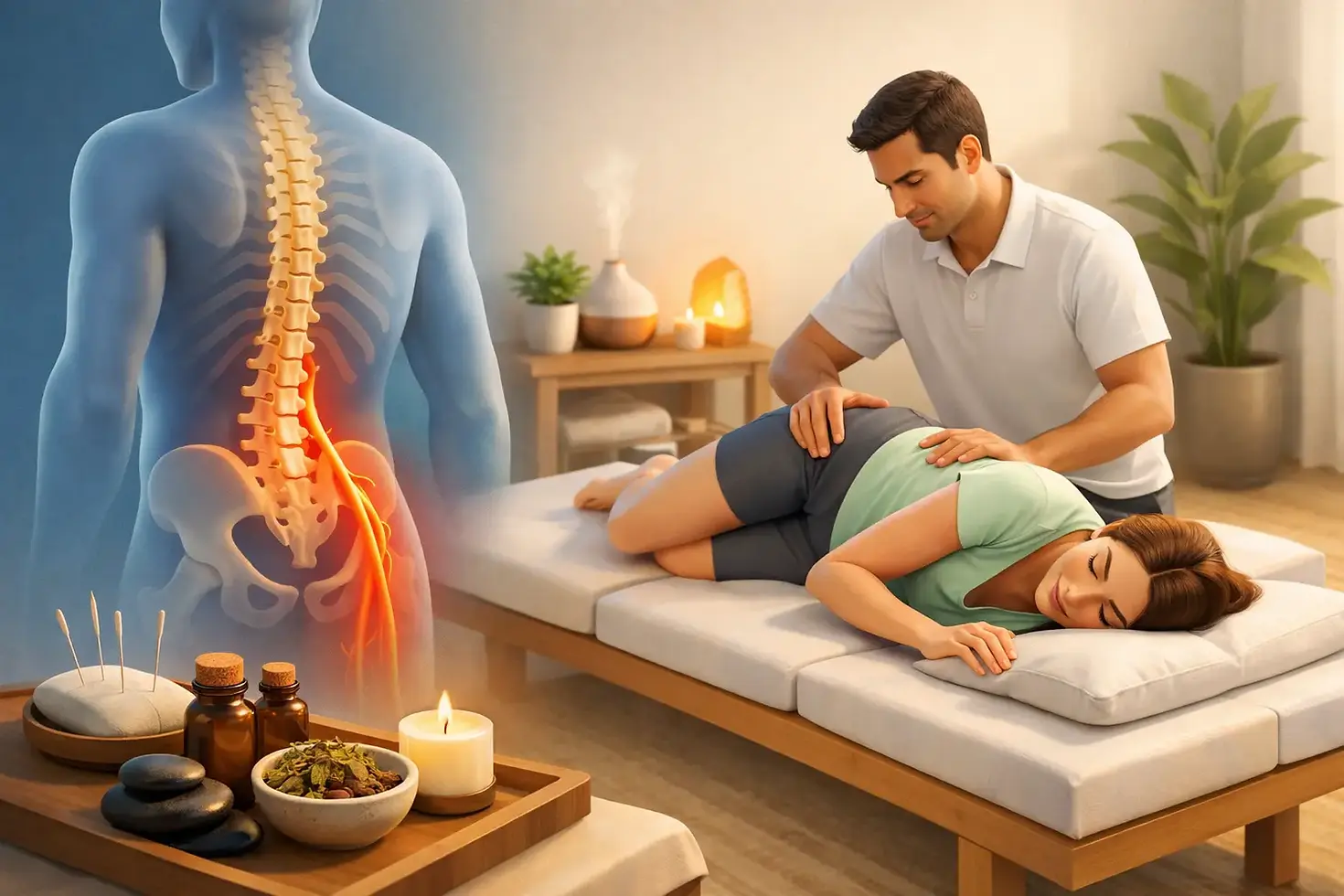
Sciatica Pain Relief Without Surgery Guide

Updated: Oct 14
Quick answer: Acupuncture is a non-surgical option many people use to ease sciatic nerve pain, muscle tension and stiffness in the low back, hip and leg. Recent flare-ups may respond within a few visits, while long-standing sciatica usually needs a series of treatments over several weeks. At Big Apple Acupuncture in Garden City, Dr. Xiao Chen starts with an assessment of your symptoms. Call (516) 250-7051 or book online.
That sharp, traveling pain from the low back into the hip or leg can change the rhythm of an entire day. If you are looking for sciatica relief without surgery, you probably want something practical: how to reduce pain, move more comfortably, and avoid letting symptoms take over work, sleep, or family life.
Sciatica is not always the same from one person to the next. For some, it feels like burning pain down one side. For others, it is numbness, tingling, tightness in the glute, or a heavy, aching leg that gets worse after sitting. Because the pattern can vary, effective care usually starts with understanding how your symptoms behave rather than chasing a one-size-fits-all fix.
What sciatica actually means
Sciatica describes symptoms related to irritation or compression along the sciatic nerve pathway. The discomfort often starts in the low back or hip and travels through the buttock and down the leg. Some people notice it most when getting out of bed. Others feel it after long drives, desk work, workouts, or lifting.
The cause is not always identical. A disc issue may be involved, but sometimes muscle tension, inflammation, postural strain, or mechanical stress around the low back and pelvis also contribute. That matters, because treatment should match the pattern. When care is too generic, patients often get short-term relief without much lasting change.
Non-surgical sciatica relief: the basics
For many adults, non-surgical care is the first step when symptoms are manageable and being monitored appropriately. Acupuncture is often chosen because it supports pain relief without adding more physical strain to an already irritated area.
From a modern clinical perspective, acupuncture may help by encouraging circulation, calming local muscle tension, and supporting the nervous system's pain-regulation response. Many patients also find that it helps reduce the guarding pattern that builds up after days or weeks of pain. When the body is bracing all the time, the low back, hip, and leg often stay stuck in a cycle of irritation.
From a traditional Chinese medicine perspective, sciatica may be understood as a blockage in the smooth flow of qi and blood through the channels. Treatment is then tailored to the exact presentation. Burning pain, dull pain, heaviness, stiffness, and symptoms worsened by stress or fatigue do not all suggest the same pattern. That is one reason personalized treatment often matters more than simply labeling the problem as sciatica.
Why people look for non-surgical options first
Most people do not want surgery unless it is clearly necessary. They want to sit through a meeting without shifting every two minutes, walk without limping, and sleep without waking up every time they turn over.
Non-surgical care appeals to patients who want a conservative, supportive approach while they work on recovery. That may include acupuncture, herbal support, mobility work, rest from aggravating activities, and gradual return to movement. It is not about pretending pain will disappear overnight. It is about creating conditions where the body is less inflamed, less guarded, and better able to heal.
There is also a practical side. Many professionals and parents cannot put life on pause for extended recovery plans. They need care that fits into a real schedule and supports function along the way.
How acupuncture may help sciatica symptoms
Acupuncture for sciatica is not limited to placing needles where it hurts. A treatment may include points near the low back, hip, or leg, but it can also include points chosen to regulate muscle tension, stress response, and overall pain sensitivity.
This broader approach matters because sciatica rarely exists in isolation. Patients with persistent nerve pain often also have poor sleep, elevated stress, reduced activity, and tension patterns that keep symptoms active. If the nervous system stays on high alert, pain can feel louder and movement can feel less safe.
Acupuncture may help reduce that load. Some patients notice a decrease in intensity after the first few visits. Others improve more gradually, especially if the issue has been present for a long time or flares repeatedly. It depends on how severe the symptoms are, how long they have been present, and what continues to aggravate the area between treatments.
What a personalized treatment plan may include
A good treatment plan for sciatica usually looks beyond the nerve pain itself. It considers your work posture, sleep position, activity level, stress load, and whether symptoms are sharp and acute or more chronic and stubborn.
In a modern acupuncture setting, care may include acupuncture along with herbal therapy or cupping when appropriate. Herbal support may be used to address patterns of inflammation, stagnation, or recovery support, depending on the individual presentation. Cupping may help when muscular tightness through the low back, glutes, or hamstrings is part of the picture.
The key is personalization. A patient with intense pain after a recent strain may need a different approach than someone whose symptoms flare every time stress rises and sitting time increases. The goal is not just temporary symptom suppression. It is helping the body settle enough to restore more consistent function.
What to expect from acupuncture care
Most patients want to know two things: will it hurt, and how long will it take to feel better. Acupuncture needles are very thin, and treatment is generally gentle. Sensations vary, but many people describe mild heaviness, warmth, tingling, or a dull ache rather than pain.
The timeline is less predictable, because sciatica has different causes and different levels of severity. Some people notice early relief in pain intensity or muscle tension. Others first notice they are sleeping better, sitting longer, or recovering faster after activity. Those changes count, because improved function often signals that the body is moving in the right direction.
Consistency matters. A single treatment may calm symptoms, but repeated care is often what helps shift a more persistent pattern. The exact frequency depends on the case.
When acupuncture works best as part of a broader recovery plan
Acupuncture can be very helpful, but it is usually not a stand-alone miracle. The best results often come when treatment is paired with smart recovery habits.
That may mean adjusting how long you sit without standing, being careful with lifting, reintroducing walking gradually, or changing how you sleep. It may also mean paying attention to stress. That connection is easy to overlook, but stress often increases muscle tension and pain sensitivity, which can make sciatic symptoms feel more active.
This is where a calm, patient-centered clinic experience can make a difference. At Big Apple Acupuncture & Herbal Therapy, the focus is not just on the pain point. It is on the whole pattern around it - tension, sleep disruption, nervous system overload, and the day-to-day habits that may be slowing recovery.
Sciatica pain relief without surgery in Garden City: who may benefit
Adults dealing with radiating low back and leg pain often seek acupuncture when they want a non-surgical option that is supportive, personalized, and grounded in both traditional medicine and modern clinical reasoning. This can include office workers with long sitting hours, active adults dealing with a flare after exercise, and caregivers whose physical demands have caught up with them.
It can also be a good fit for patients who feel stuck between doing too much and doing too little. Rest alone may not be enough, but forcing activity can backfire. Acupuncture may help reduce the irritation level so movement feels more possible again.
That said, not every case follows the same timeline. Mild symptoms that started recently may respond differently than chronic pain with repeated flare-ups. Honest care should make room for that reality.
Choosing a care approach that feels sustainable
When people search for non-surgical sciatica relief, they are often looking for more than pain reduction. They want confidence that their plan is sustainable. They want to know they are not just covering up symptoms for a few days.
A thoughtful acupuncture plan should feel clear, practical, and responsive to change. If symptoms improve, treatment can shift toward stabilization and prevention. If progress is slower, the approach may need to be adjusted. Good care is not rigid.
For many people in Garden City and the surrounding Long Island area, that balance matters. They want a professional setting, a calm experience, and care that respects both immediate discomfort and long-term recovery.
If sciatica has been narrowing your routine, the next useful step is often not doing more at once. It is choosing a focused, personalized approach that helps your body settle, move, and recover with less strain.
Frequently asked questions
How many acupuncture sessions do I need for sciatica?
It depends on how long you have had symptoms and how severe they are. Recent flare-ups may respond within a few visits, while long-standing sciatica usually needs a series of treatments over several weeks. Dr. Chen will suggest a plan after your first assessment.
Does insurance or HSA/FSA cover acupuncture for sciatica?
Big Apple Acupuncture is in-network with 1199 and WellCare and accepts out-of-network benefits from Aetna, UnitedHealthcare PPO, Blue Cross Blue Shield, UMR and Medicare Advantage PPO plans. HSA and FSA cards can also be used. Call or text (516) 250-7051 to verify your coverage before your visit.
When should I see a doctor instead of waiting?
Seek medical care right away if you have new or worsening leg weakness, numbness in the groin area, or loss of bladder or bowel control. Acupuncture can be used alongside care from your physician.


Comments